
Continuing with my beer bucket list, I was very excited to be able to drink gose in the place of its origin—Goslar, Germany. Since most people know Germany for light lagers, I love that quirky beer styles like this and the towns that birthed them remain veritable hidden gems.
I’m a big fan of drinking beer in their original places of origin—like kölsch in Köln, pilsner in Pilsen, rauchbier in Bamberg, and Berliner Weiss in Berlin. I feel like this is always the best way to enjoy these beers, in their true form, the way they were originally meant to be enjoyed. So, to help you with your beer bucket list, here’s my quick guide on where to drink gose in Goslar (and Leipzig).
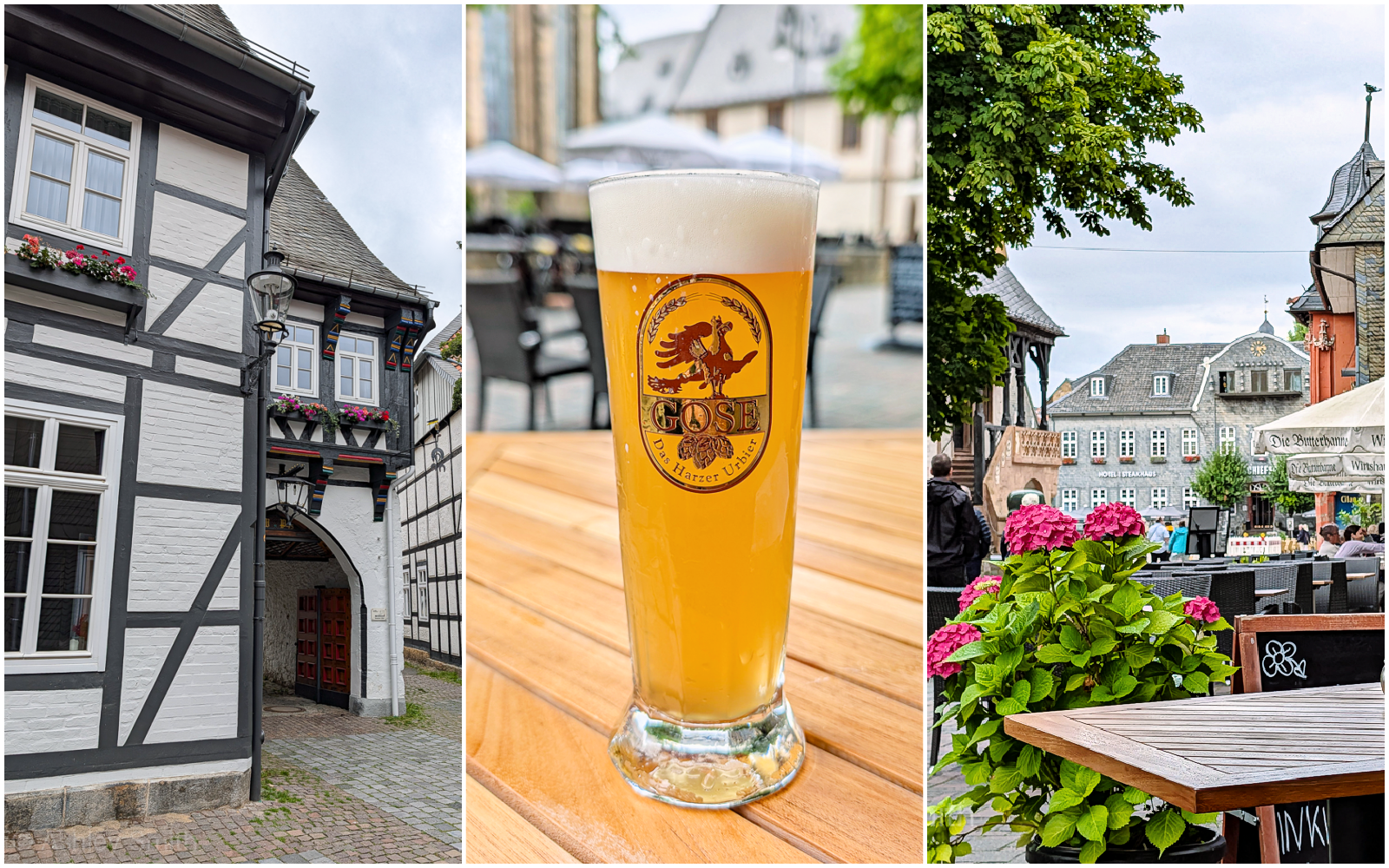
What is gose?
Simply put, gose is an unfiltered sour wheat beer. They’re only mildly sour though, much like a Berliner Weisse, with fruity and spicy flavor notes. They’re also slightly salty which makes them feel extra refreshing. (Not quite the “Gatorade of beers,” but not super far off either.)
They have a relatively low ABV (alcohol content) at around 4.8% and a golden, hazy color that perfectly matches my rain jacket. They typically come served in a stange—a tall cylindrical glass pronounced like “shtahng-eh.”
Fun fact: When drinking gose, don’t say “Cheers!” or “Prost!” You’re supposed to say “Goseanna!” instead.
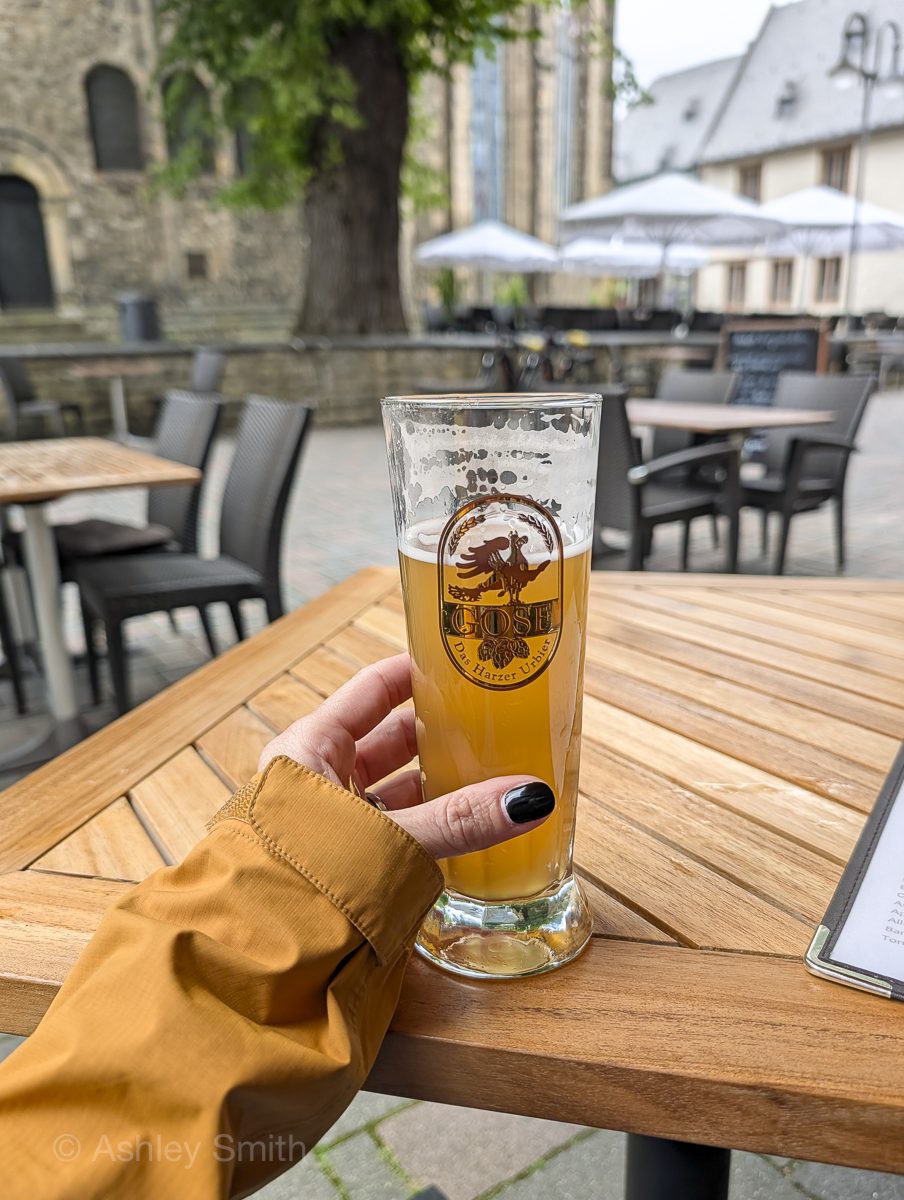
Gose from Goslar
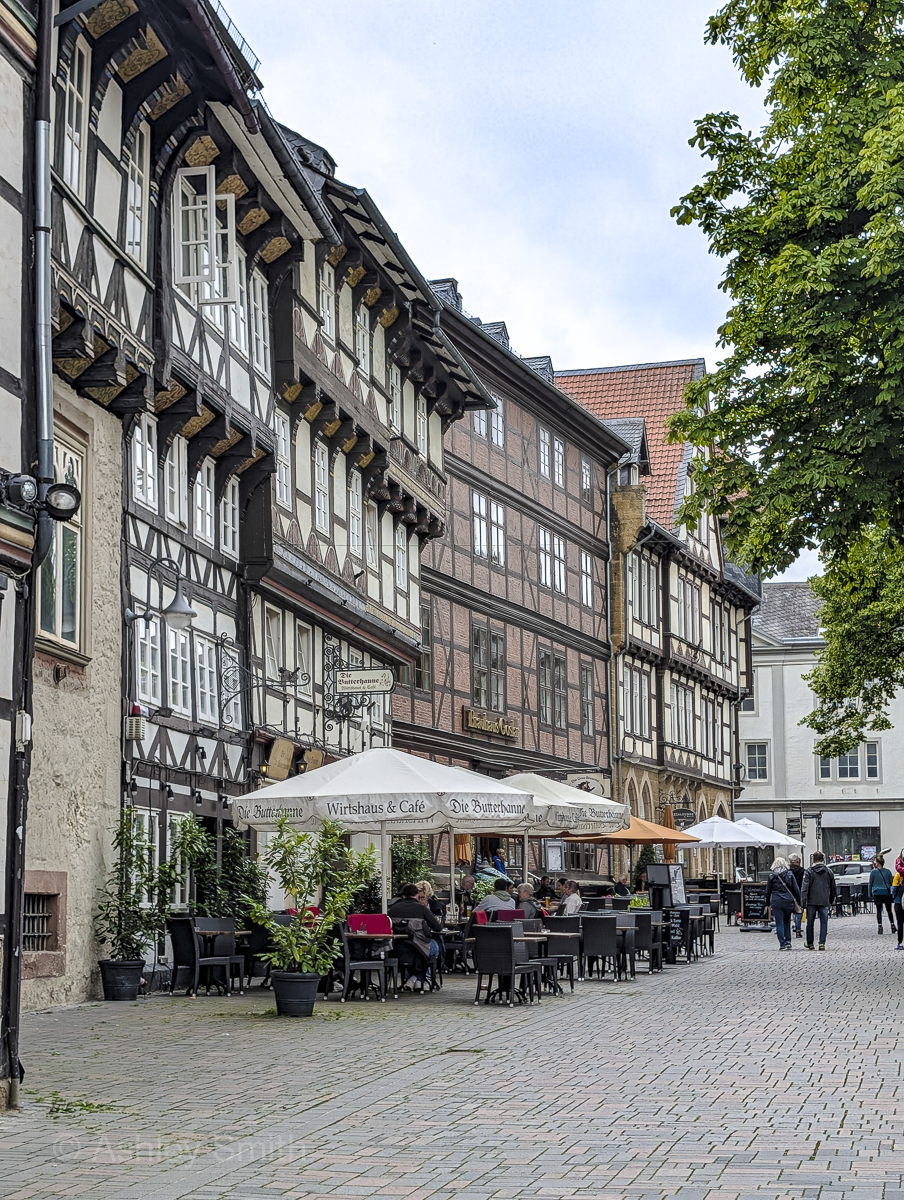
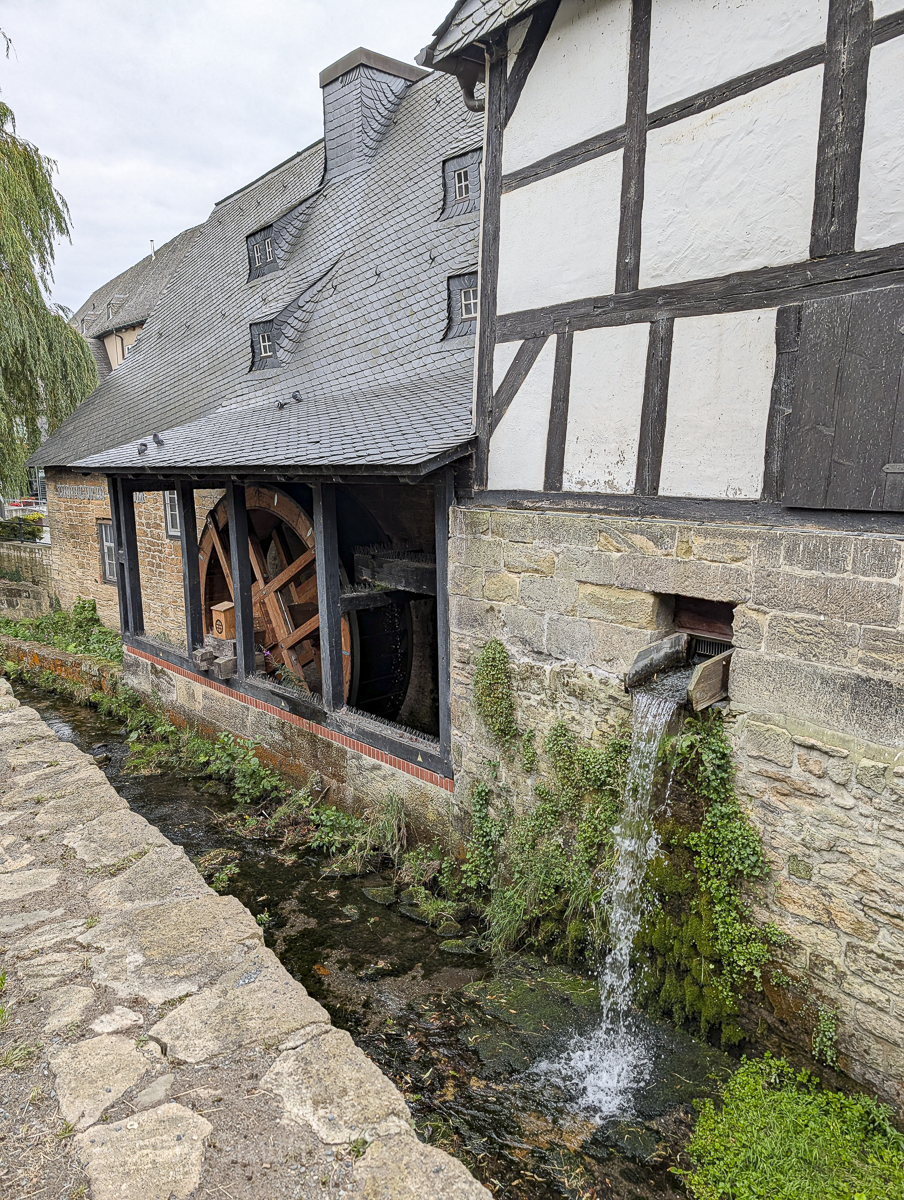
The name “gose” comes from the location of its origin—Goslar, Germany. It was first brewed here in the 1100s (though some sources estimate even earlier than that) using the (slightly) saline water from the nearby Gose River.
Throughout the Middle Ages, gose beer became extremely popular throughout the Harz region (where Goslar is) and became a major economic and trade staple. At the height of its popularity, the city of Goslar had granted brewing rights to nearly 400 producers.
However, that intense popularity gradually migrated to nearby areas, eventually leaving Goslar in the rearview. By the mid-1800s, gose production in Goslar had ended altogether. Gose beer remained a thing of the past until 1993 when a local brewery revived the medieval style here in its birthplace. Gose beer has once again been produced in Goslar ever since.
Gose in Leipzig
The main place gose migrated to was the city of Leipzig where it seemed to settle in the mid-1700s. At the turn of the 20th century, gose was the most-consumed style of beer in Leipzig. Since then, an increase in craft brewing worldwide has greatly diluted this popularity since there are just so many different beer styles and producers now. Even so, Leipzig (not Goslar) is widely seen as the “home of gose.” So much so that the style is now commonly referred to as “Leipziger Gose” to differentiate the original style from the much-bastardized American version.
And this is why I feel the need to address both cities in this post on where to drink gose in Germany. Leipzig may be its home, but Goslar is both its birthplace and its namesake, and that definitely counts for something.
Visiting Goslar
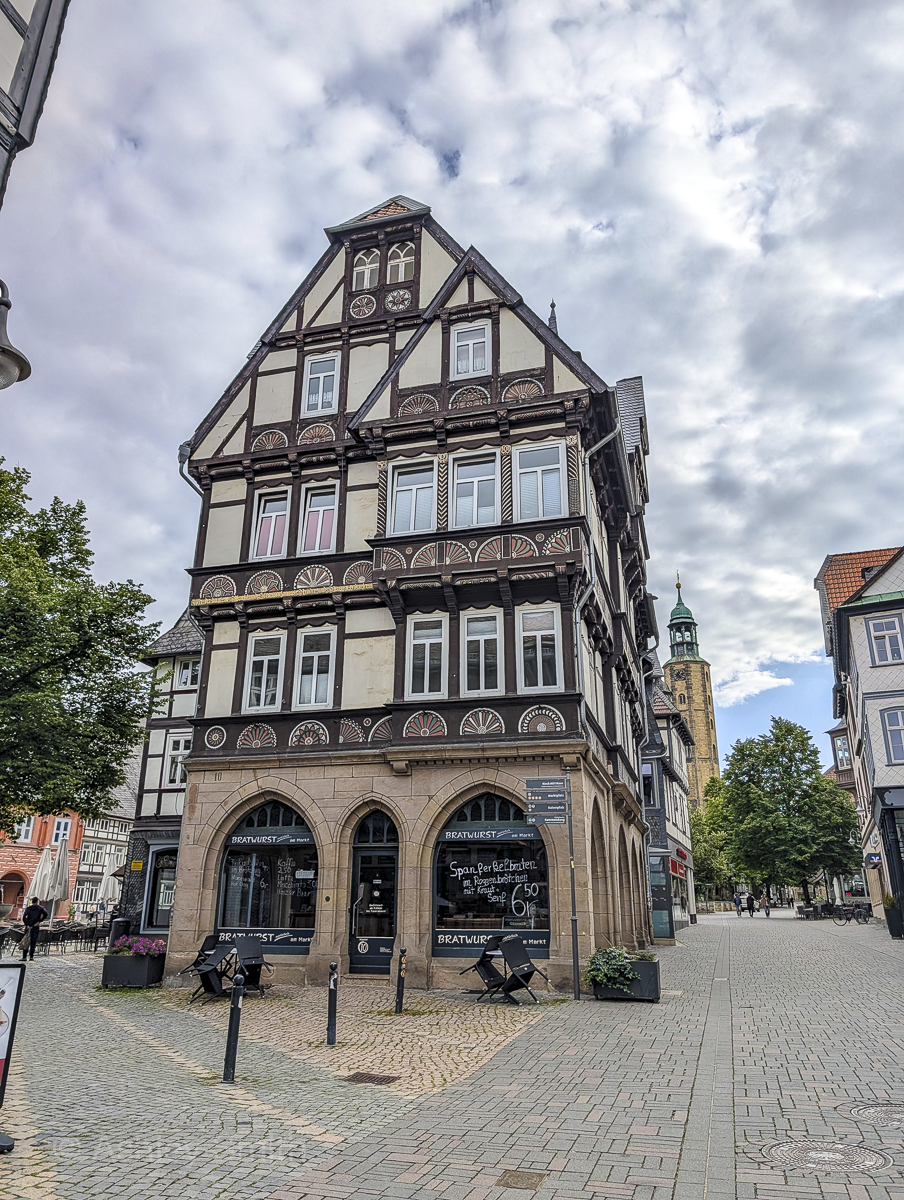
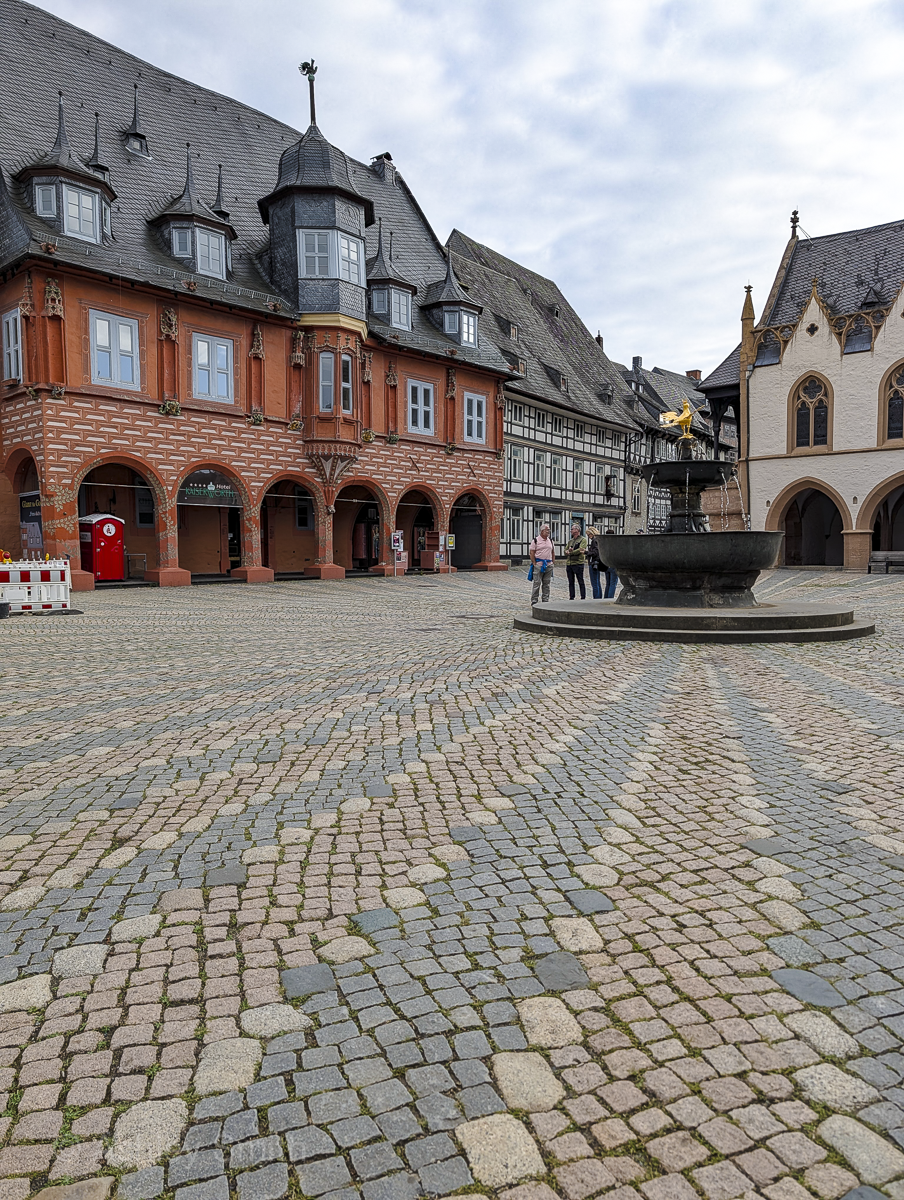
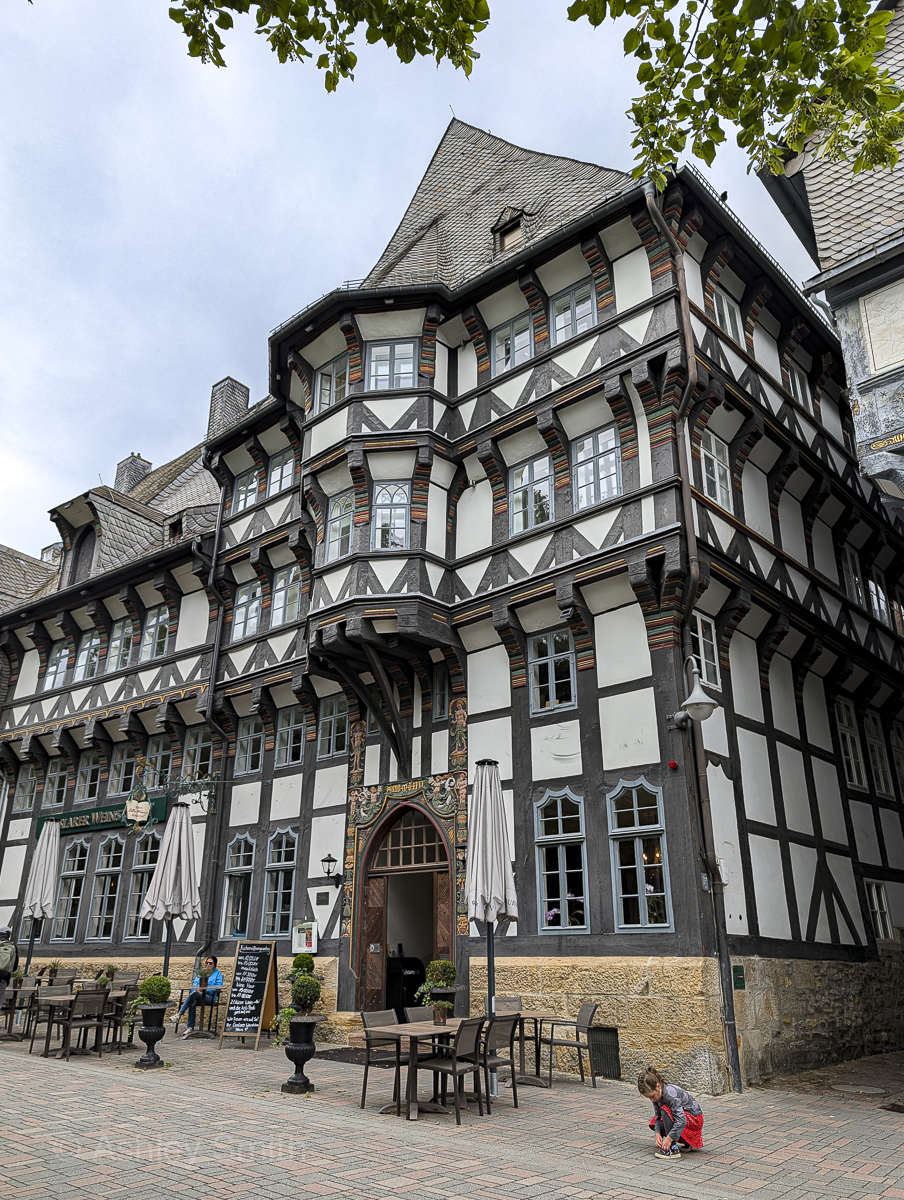
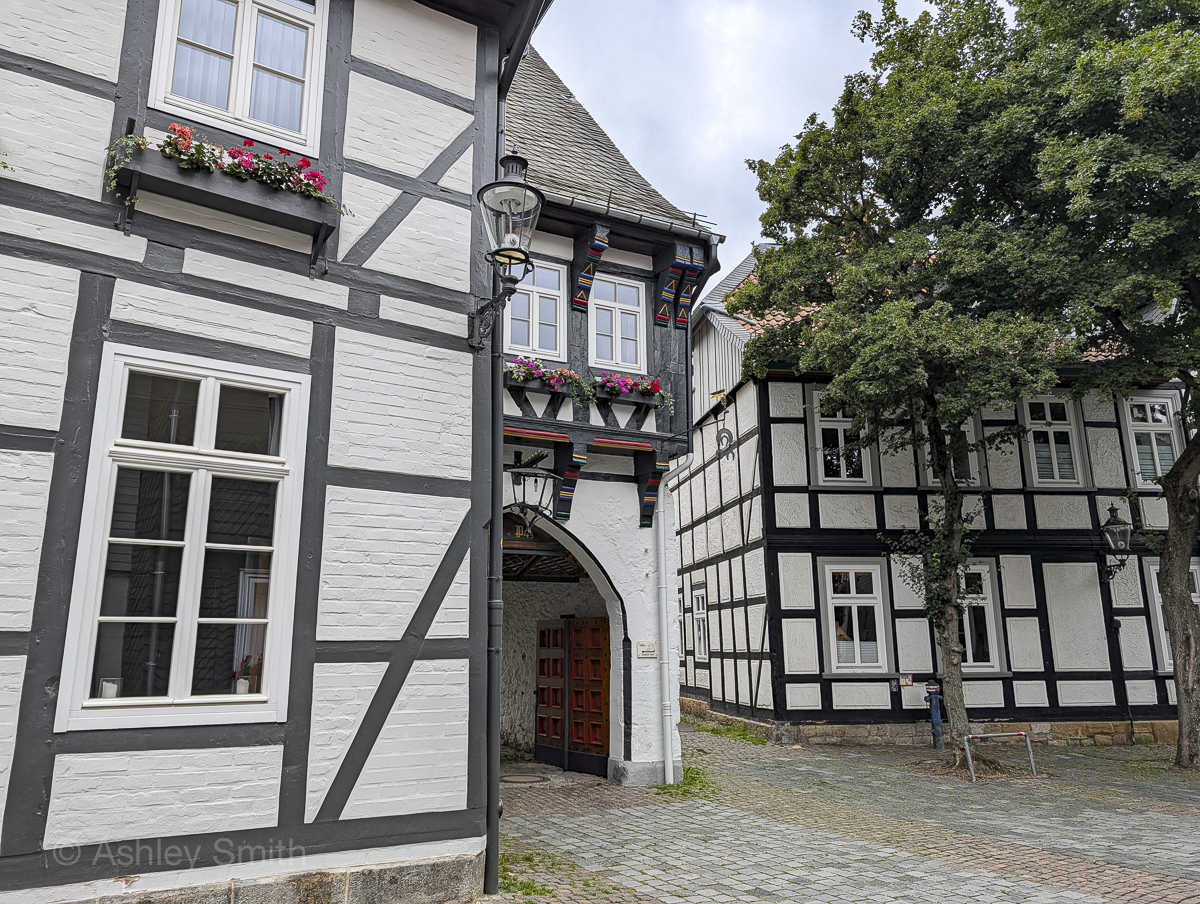
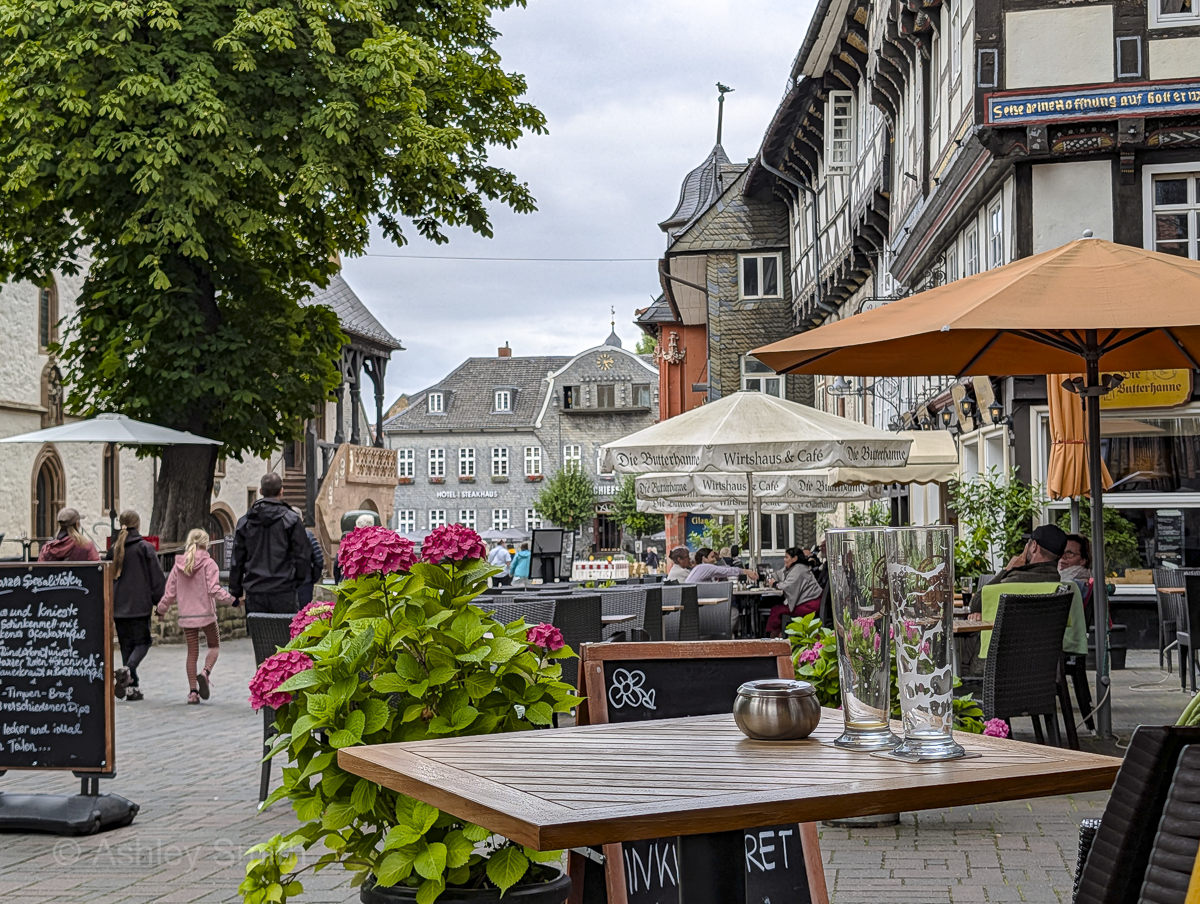
Visiting Goslar is a truly delightful experience all around. This small town has flown mysteriously under the radar all these years and I’m shocked it’s not talked about more. People go absolutely apeshit for preserved medieval towns like Rothenburg ob der Tauber (admittedly, one of my favorite places ever), but no one ever talks about Goslar. And it is CU-UTE!
I’ve saved all the great things I can say (and show you) about Goslar here in my complete guide to Goslar, but just know it’s worth visiting for more than just beer. Here’s what you should know:
How to get to Goslar
Perhaps the reason Goslar is still as tourist-free as it is, is because it’s not all that well-connected to the larger cities. It sits more-or-less smack in the middle of the country and not really close to anything.
Driving to Goslar
If you have your own rental car, you won’t have a problem getting here at all, though it does require a bit of driving. Goslar is about a:
- 2-hour drive from Leipzig
- 2-hour 45-minute drive from Dresden
- 3-hour drive from Berlin
- 3-hour drive from Hamburg
- 3-hour 15-minute drive from Frankfurt
Rent a car here if you need one. (This is the site I use to book my rental cars.)
Taking the train to Goslar
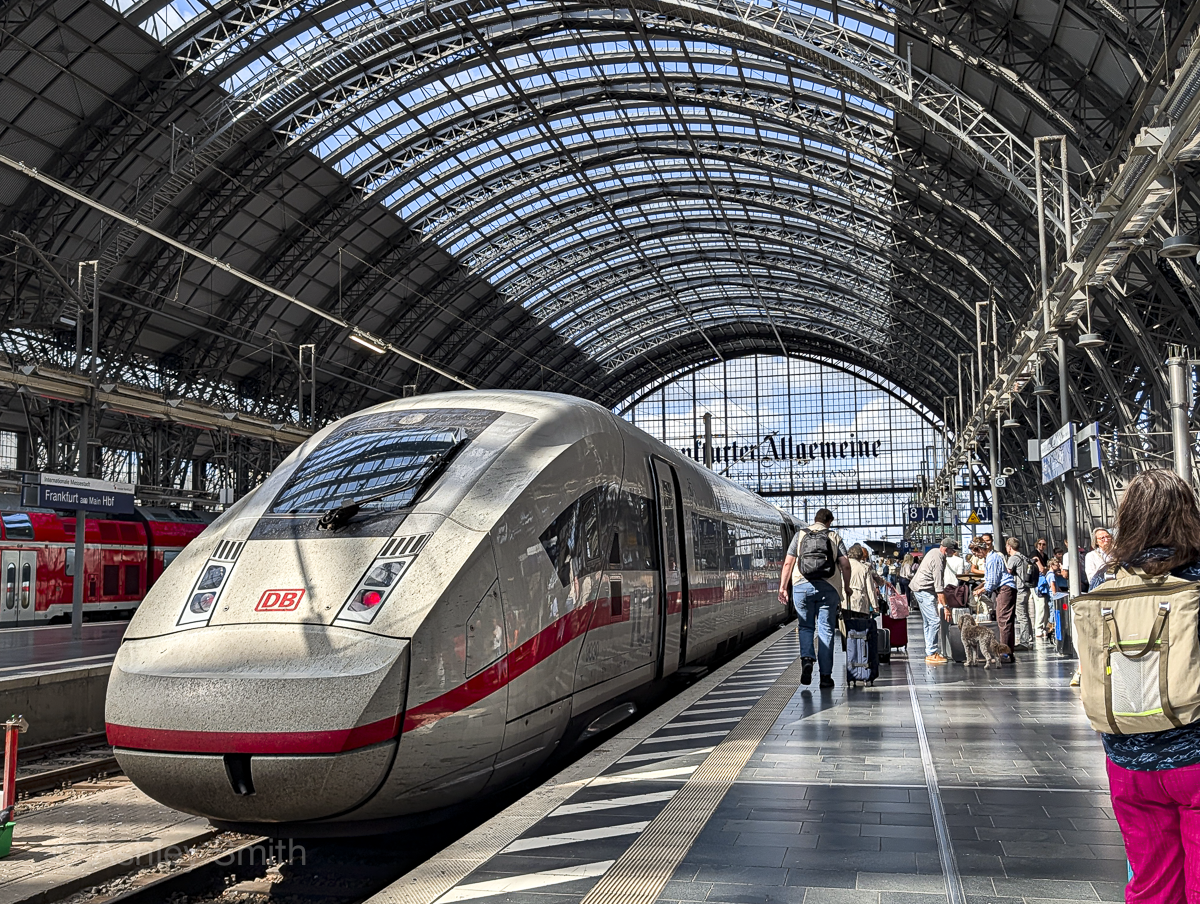
If you’ll be taking the train, you have a little more work ahead of you. This is how I traveled to Goslar in July 2026. I started in Frankfurt and had to take three trains to reach Goslar which took around 5 hours. And that was after the Deutsche Bahn canceled the train journey I’d originally booked and I had to change my entire route. For what it’s worth, on my actual travel day none of my trains were late and everything ran smoothly. So there’s that.
There are what seems like an infinite number of train combinations to get to Goslar from wherever you’re starting out. For me, it was: Frankfurt airport > Frankfurt Hbf > Gottingen > Goslar.
You’ll have to try out a few scenarios for yourself and I highly recommend having an entire backup route planned out just in case. Since you’ll be traveling through smaller towns, even if only one leg of your journey gets canceled or delayed, it’ll screw the whole thing up. Don’t forget to allow extra time in between your transfers to allow for delays.
Check out train routes and schedules here.
Where to stay in Goslar
Small as it is, Goslar still has tons of hotel options to choose from. Here are a few on my short list:
- Akzent Hotel Villa Saxer – This is where I stayed in July 2026 and I loved it. Great location from which I could walk everywhere, big comfy room and a huge bathroom, and a friendly staff. Highly recommend.
- Hotel Schwiecheldthaus – Excellent reviews, spacious modern rooms, very close to the center of town
- Hotel Niedersächsischer Hof – Large hotel right by the train station, big rooms, and more excellent reviews
Check out all Goslar hotel options here.

Visiting Leipzig
Compared to Goslar, Leipzig is a massive urban city. It’s easy to get to with lots of tourist infrastructure (but still not that many tourists). It reminds me a lot of both Vienna and Turin (Italy) in terms of its grand buildings, gorgeous historical architecture, and a looming question of “Why don’t people talk about this place more?”
How to get to Leipzig
It’s incredibly easy to get around Leipzig once you’re here and there’s plenty of great things to see and do (which I’ll include in a separate post). I greatly enjoyed my time here!
Driving to Leipzig
Again, if you have your own rental car, getting to Leipzig will be a cinch. (Just know this is a big city with typical big city obstacles.) Leipzig is about a:
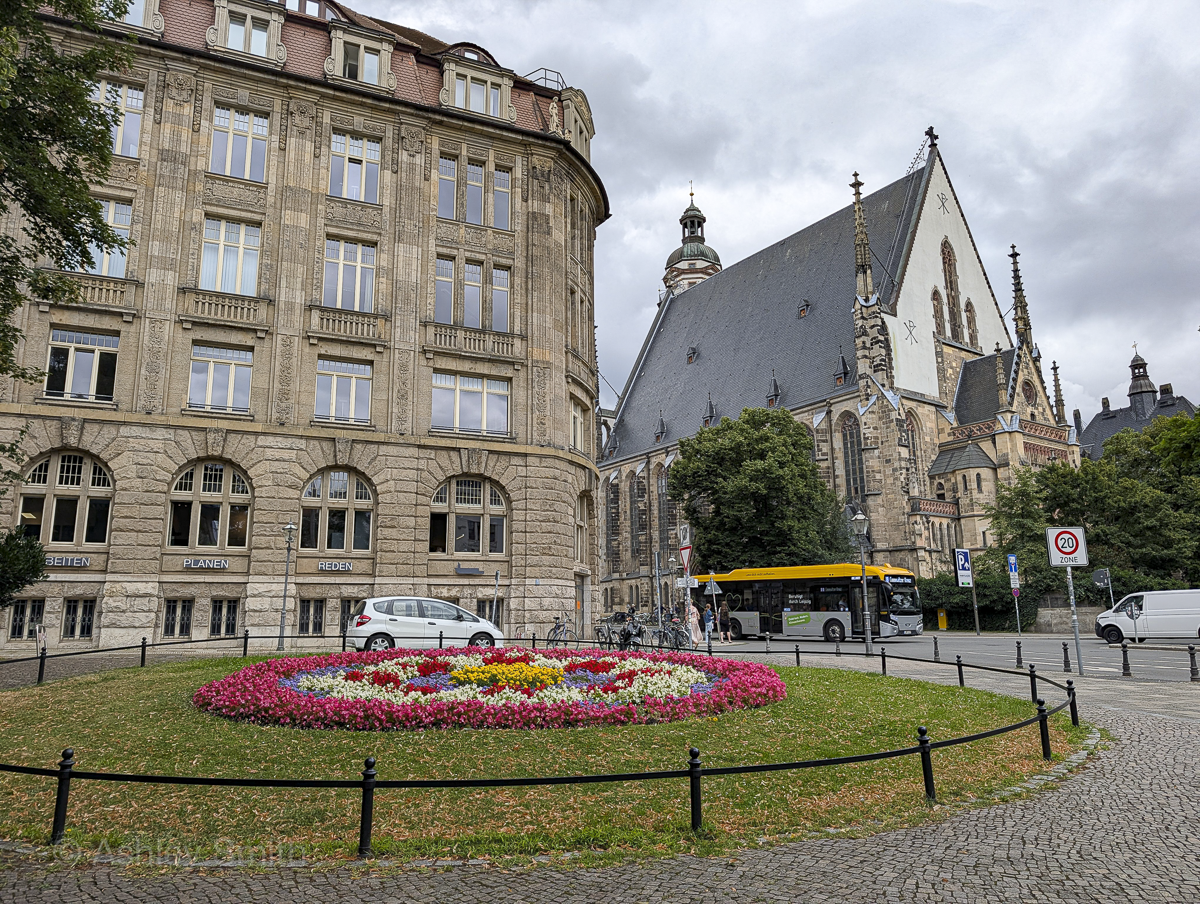
If you don’t feel comfortable driving in a big city, Leipzig has a large “Park-and-Ride” parking area that’s outside the city center. You can park here (for free!) and take the tram into the city to avoid all that unwanted driving and parking stress. (I seriously wish more cities had these!)
Rent a car here if you need one.
Taking the train to Leipzig
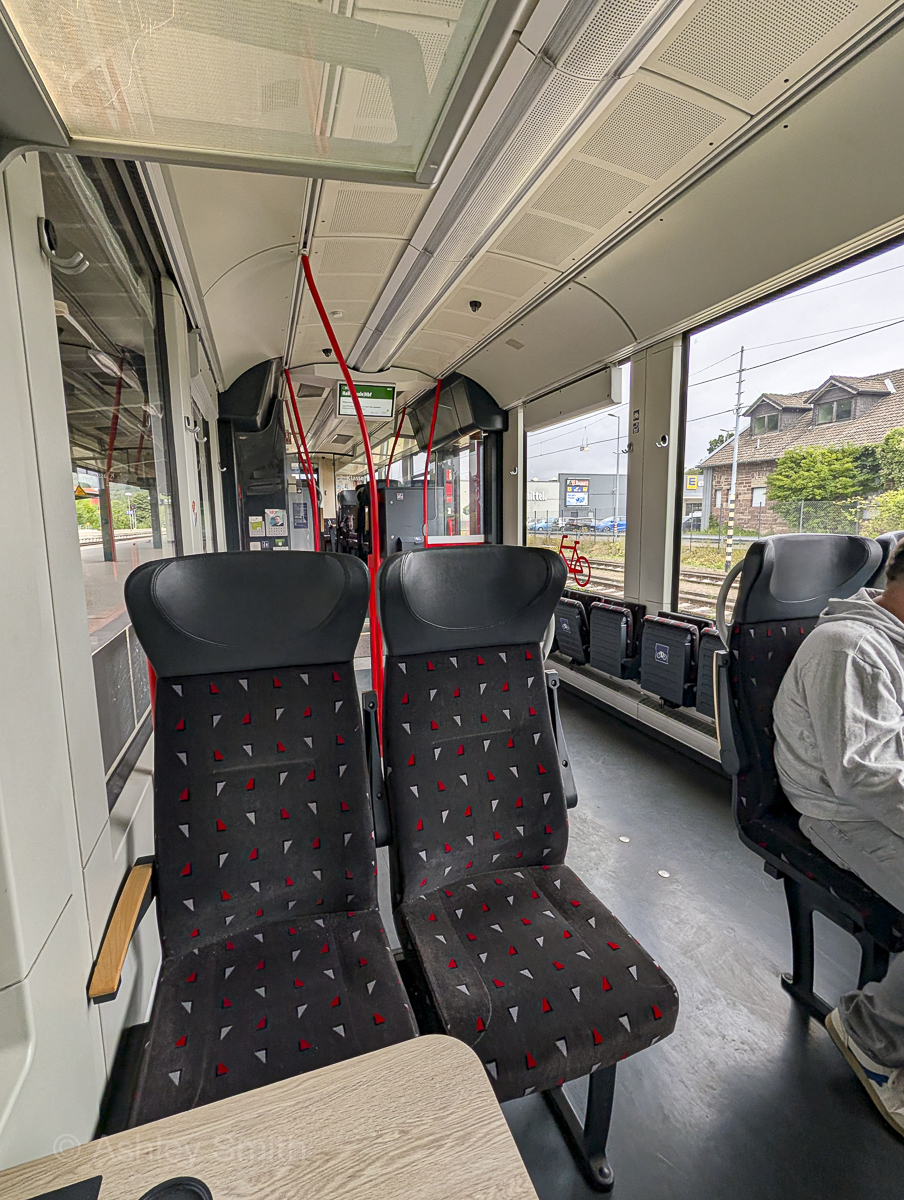
I took the train to Leipzig from Goslar and it took me 3 hours and two trains. But again, that was Goslar—the hard-to-reach place. Getting to Leipzig via train from bigger cities will be faster, easier, and often direct. You can see the latest train schedules and rates here.
Where to stay in Leipzig
Being an even bigger city, you have even more hotel options to choose from in Leipzig. Here are a few good ones to get your search started:
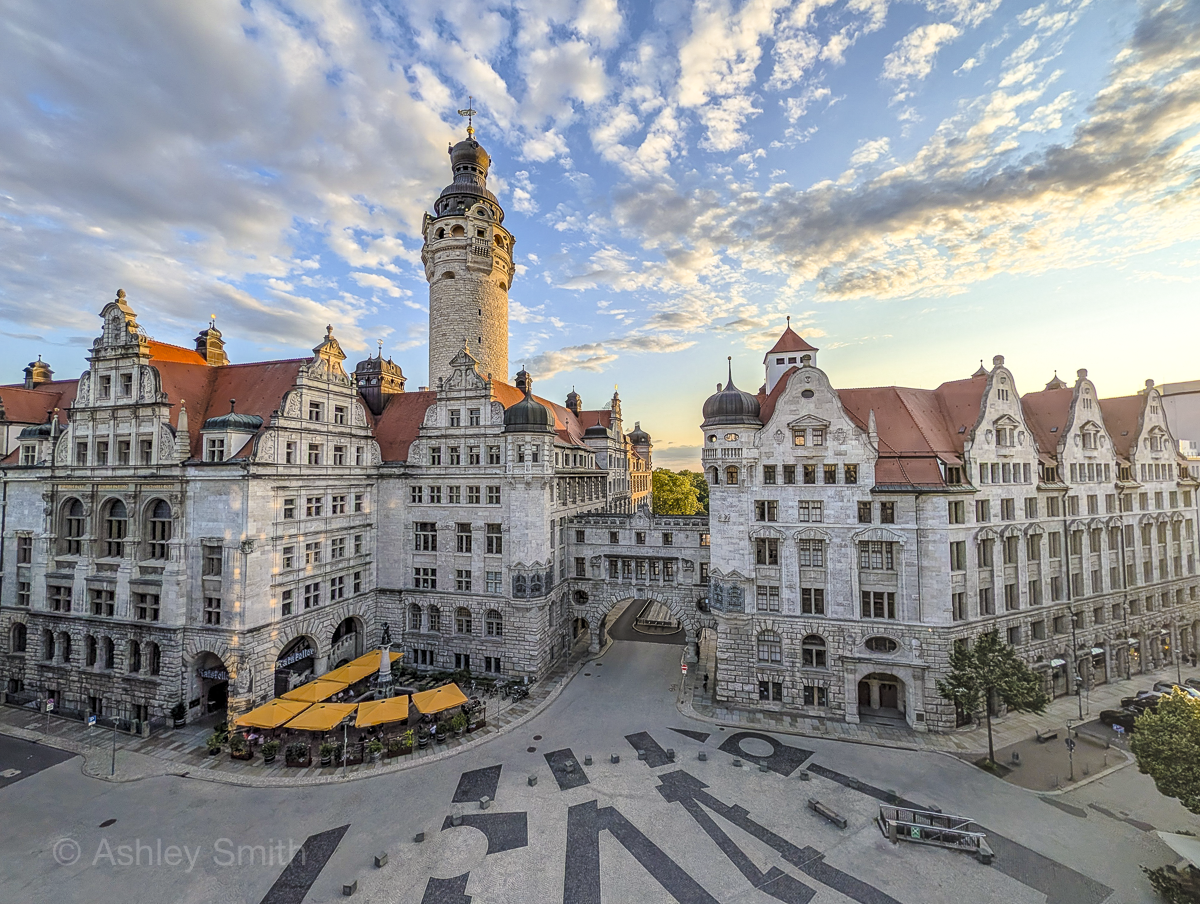
- NH Leipzig Zentrum – This is where I stayed in July 2026 and I absolutely loved it. The location is perfect and close to lots of sights and public transportation; my room was big and clean and you simply could not beat the view. I would definitely stay here again.
- Motel One Leipzig-Augustusplatz – Great European hotel chain in a central location just a short walk from the main train station
- Stay KooooK Leipzig City – Quirky modern hotel with some really interesting rooms; a totally weird name but people love this one!
See all of Leipzig’s hotel options here.
Where to drink gose in Goslar
Because gose beer fell out of popularity, there are no longer 400 places to drink gose in Goslar. (Bad for beer lovers; great for me as someone writing a blog post about it.) Instead, here in Goslar there’s just one (albeit delightful) place to drink an original gose.
Brauhaus Goslar
Brauhaus Goslar is right in the center of town just a few steps from the main market square. They have indoor and outdoor seating, three beers on tap, and a full food menu. (But if you want to eat you need to park it inside; outside is just for drinking.)
This place offers something I’ve never seen before—a choice. You can choose from either a helles gose or a dunkel gose. (And by ‘choose’ I just mean which are you getting first because obviously you’re going to get both.) The third beer they offer is a pilsner so we’re just going to ignore that one.
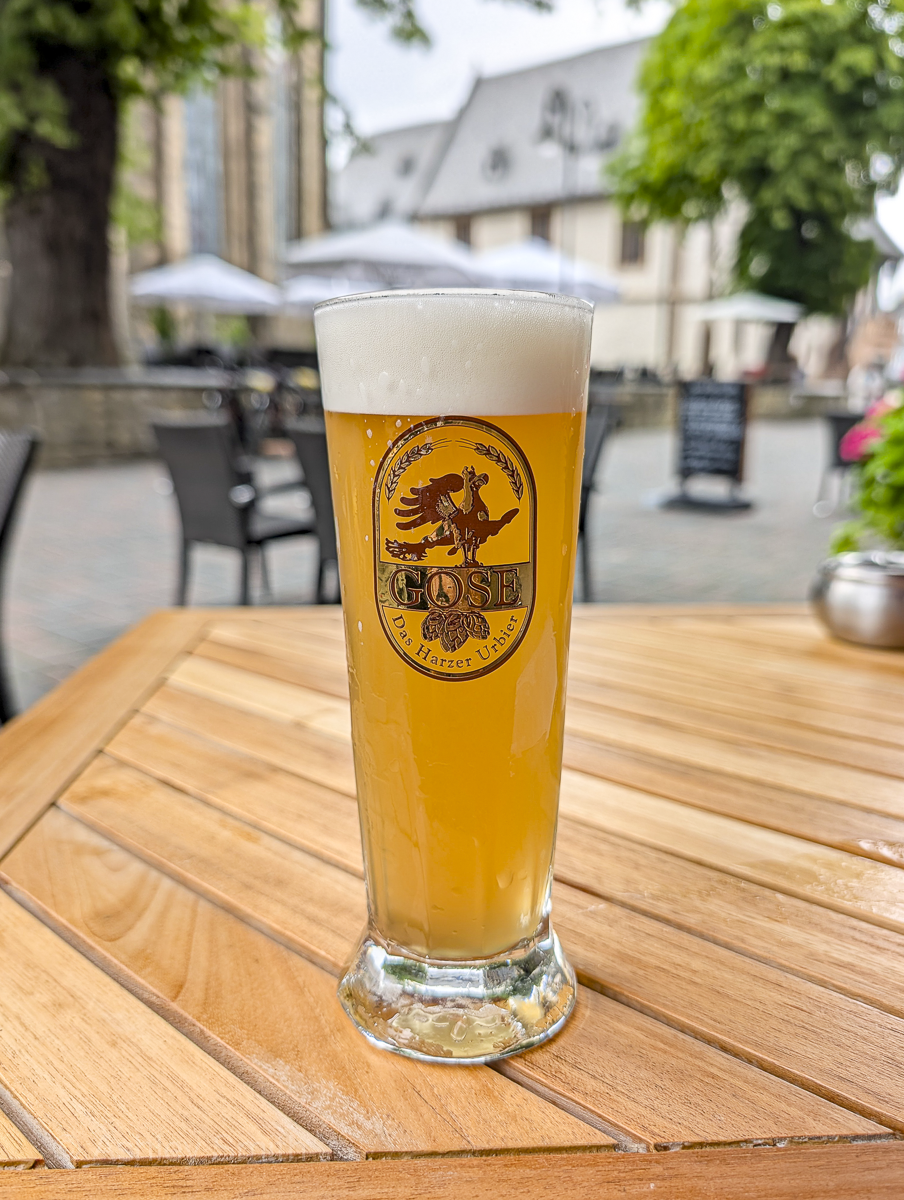
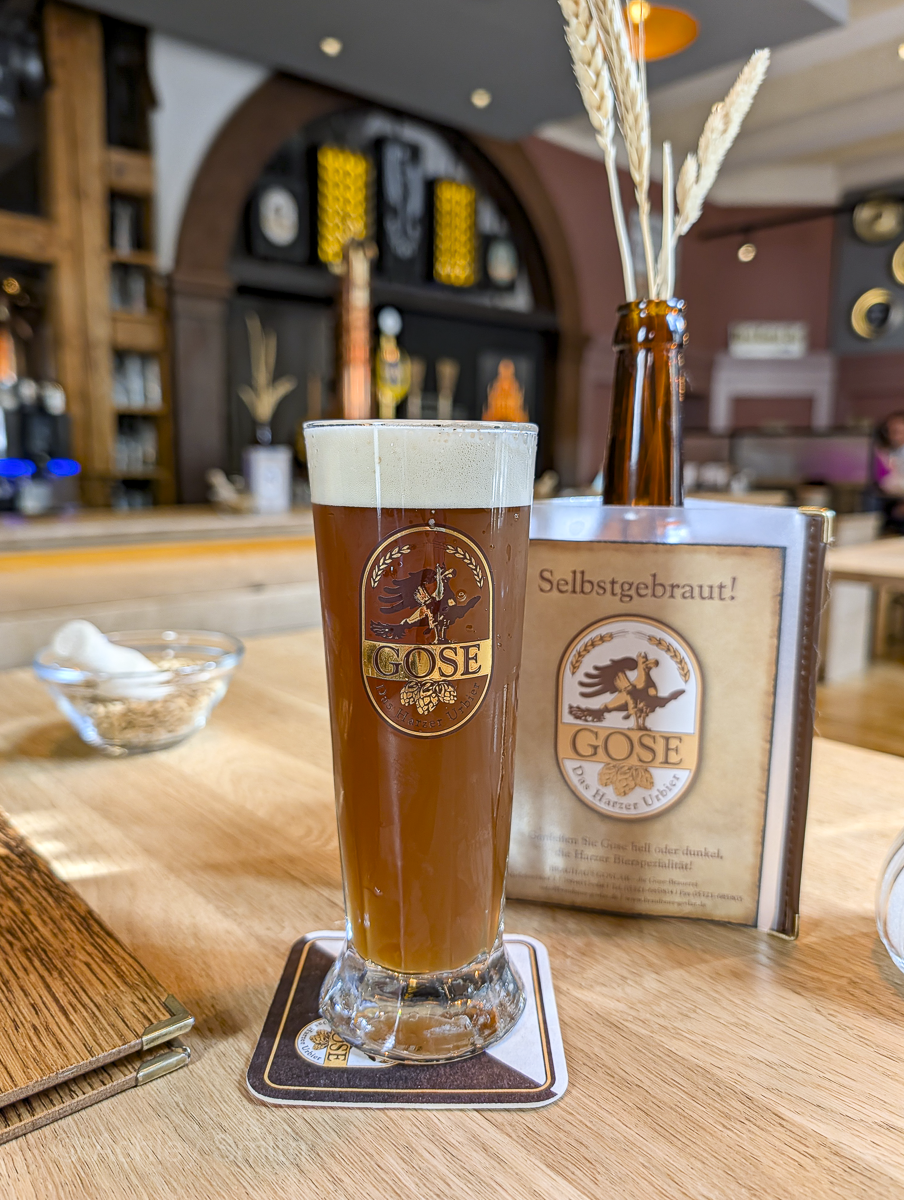
As a huge fan of helles in general, I started there. And the flavor actually shocked me. It wasn’t salty at all (my favorite aspect of gose) and actually had an oily mouthfeel which I didn’t expect (but really liked). Overall, I loved it, but it definitely wasn’t giving ‘gose’ the way you’d expect it to. The gose dark had a more ‘gose’-y flavor to it and was equally delicious.
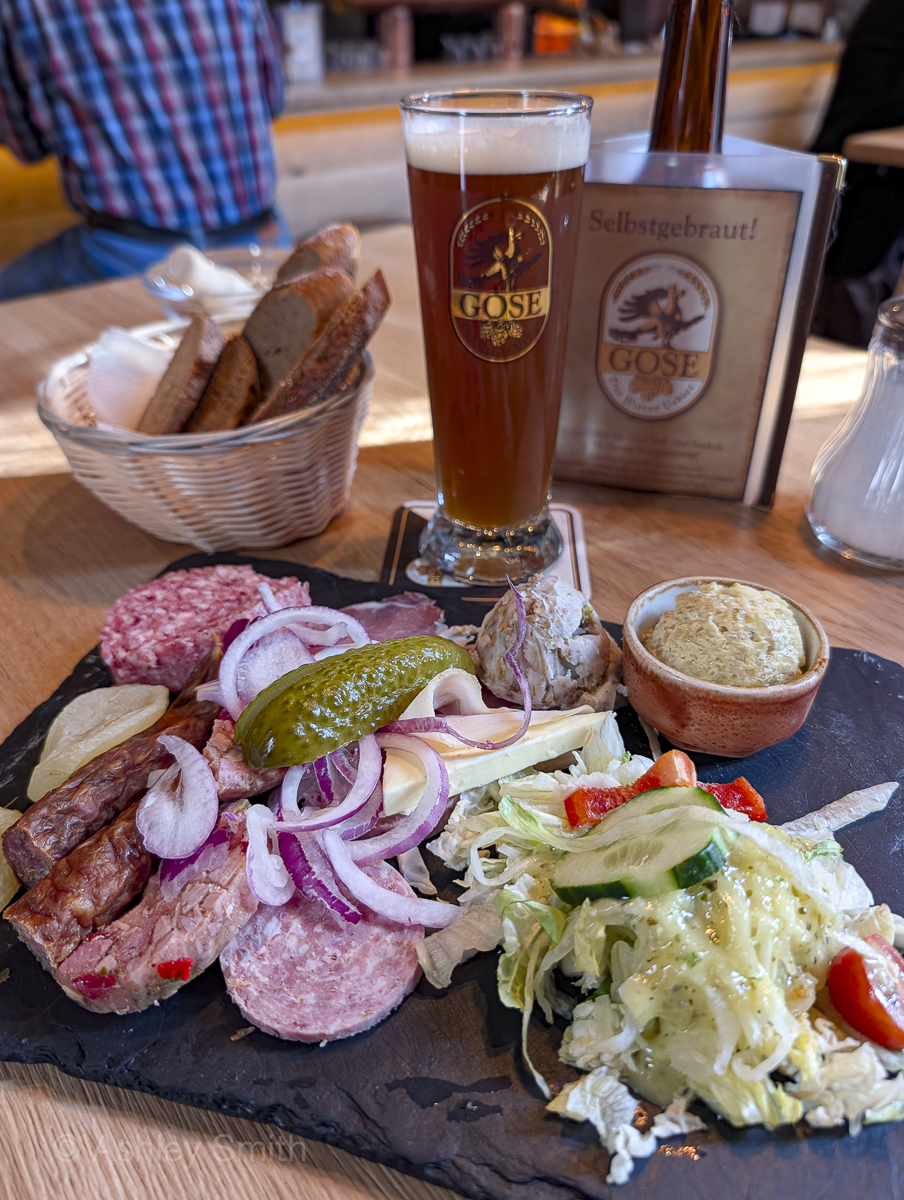
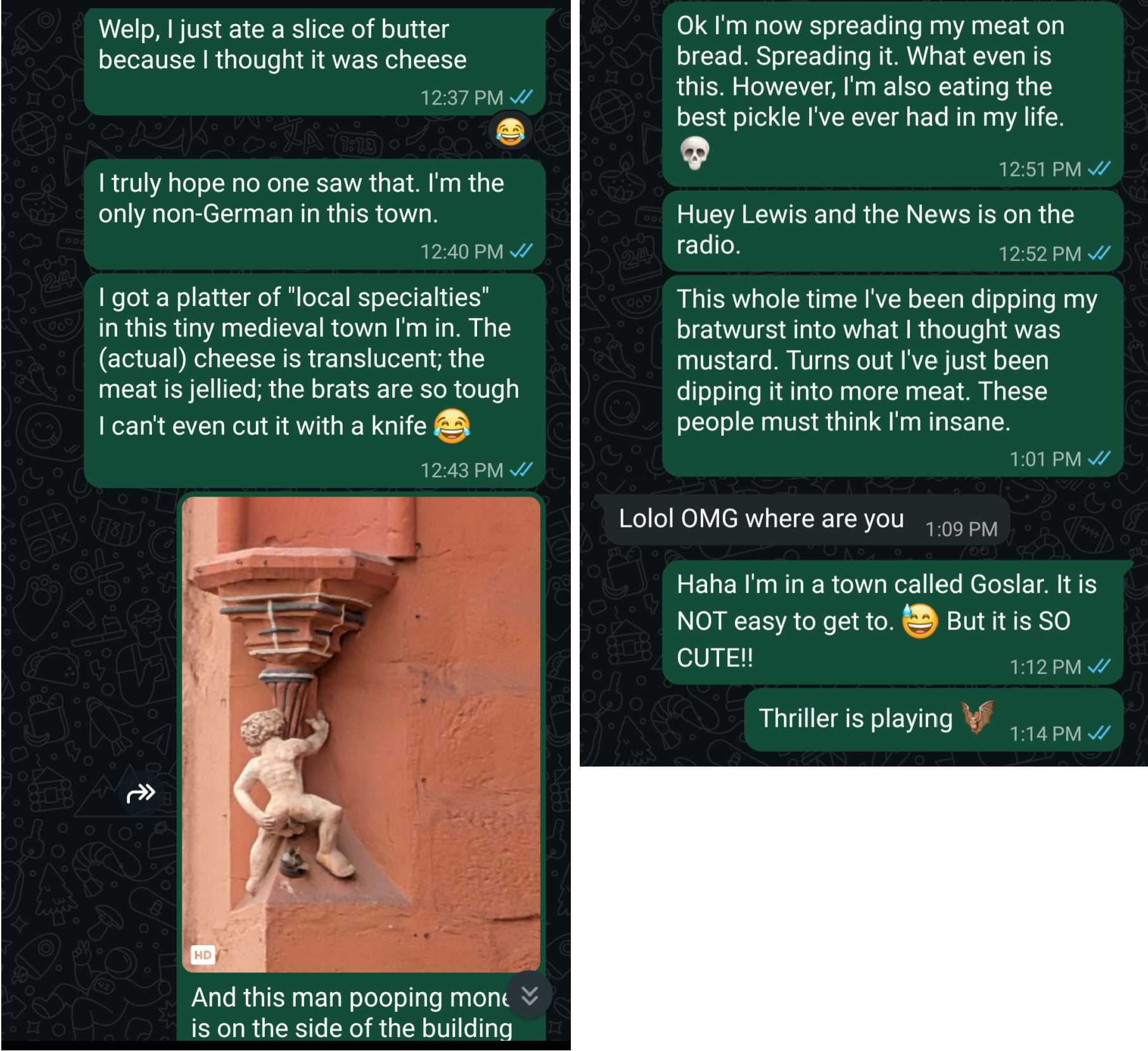
While here I also ordered the “Selection of Harz Specialties” for dinner. This included several different local meats, some local cheeses, a pot of lard (apparently), and some bread. I feel like the only way to describe this meal is just to show you the text exchange between me and my friend Amanda. Eating alone in a foreign country is always an adventure. (Their TripAdvisor page has more pictures of their other food items if you’re interested.)
Where to drink gose in Leipzig
Being the “home of gose” now, Leipzig has more options in terms of where to drink gose. In fact, it has exactly double that of Goslar. So I hope you can do that math. Again, even though Leipzig is the place to go for gose, this beer style in general has fallen out of popularity so it’s still not like the city is drowning in it. Even so, you can get some damn good gose here.
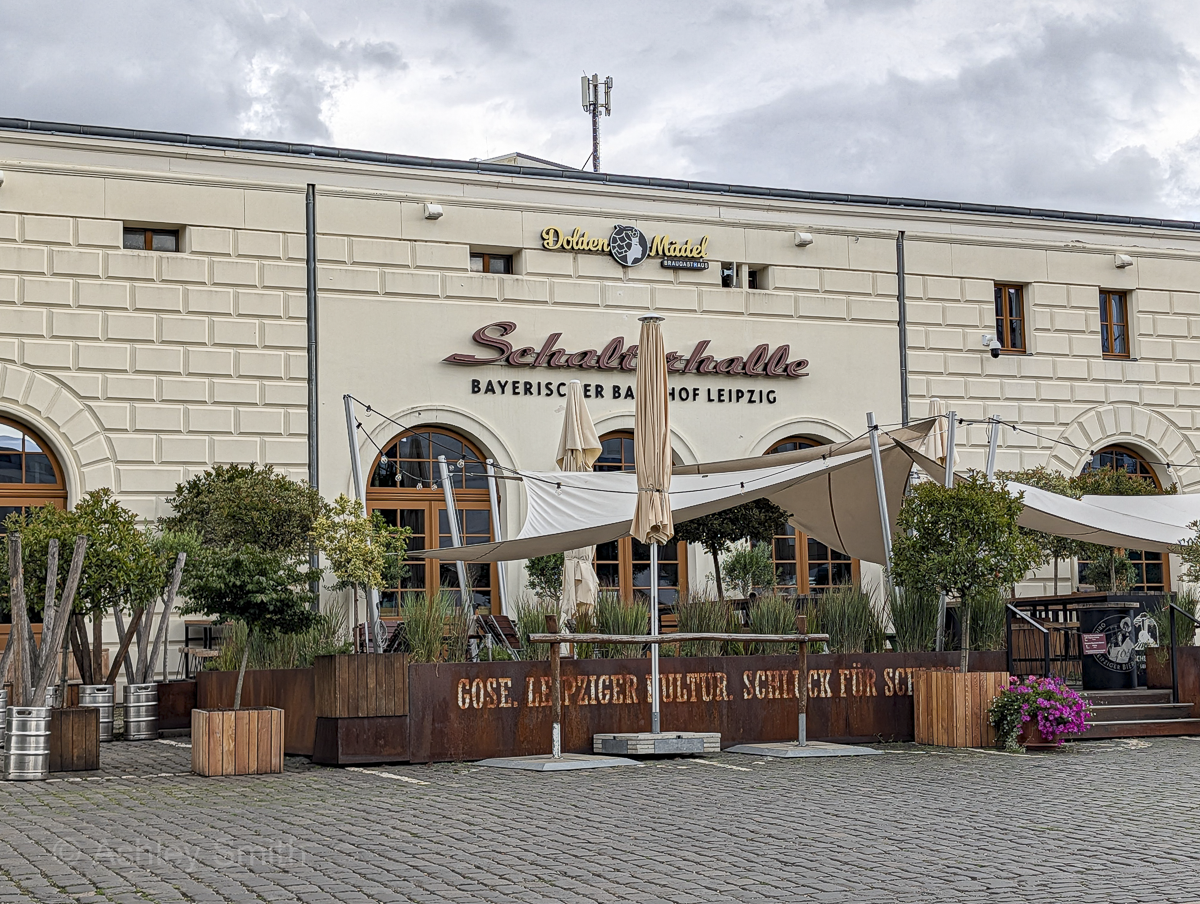
Bayerischer Bahnhof
The building complex that’s known as Bayerischer Bahnhof originally opened as a train station in 1842. (Bahnhof meaning ‘train station’ and all.) Even after being nearly completely destroyed by Allied bombs in 1944, it continued to serve as a railway station for one more year until they ran out of funds to renovate it. What was left of it was left to rot.
In 1975, the building was listed as a national historic monument. But it wasn’t until 1999 that a local brewery owner and the city came to an agreement for renovating it. In 2000, the building—now the home of the Bayerischer Bahnhof brewery—was fully renovated and opened to the public. The complex has since expanded to include other restaurants and a distillery with more expansion on the way. (And yes, you can still catch the U-bahn in the station underneath.)
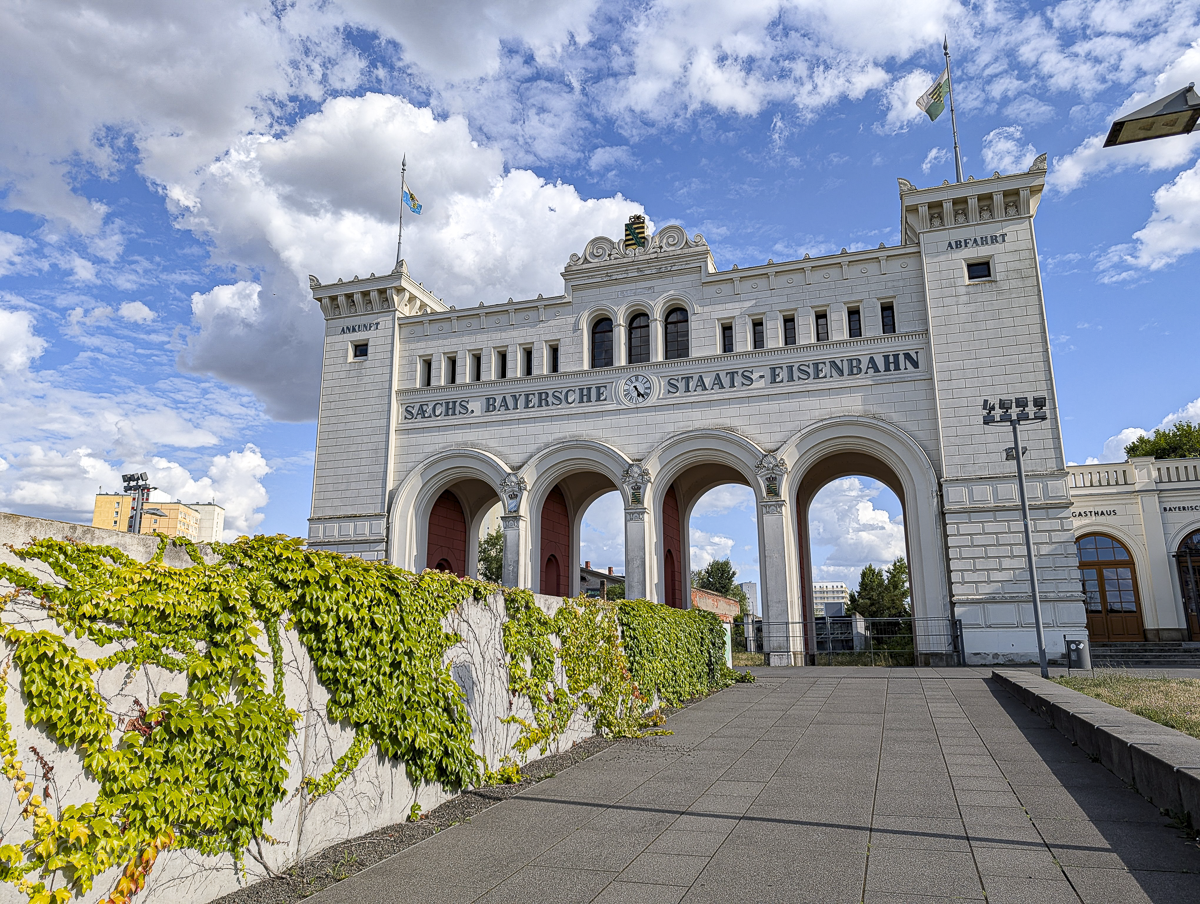
Gasthaus & Gosebrauerei
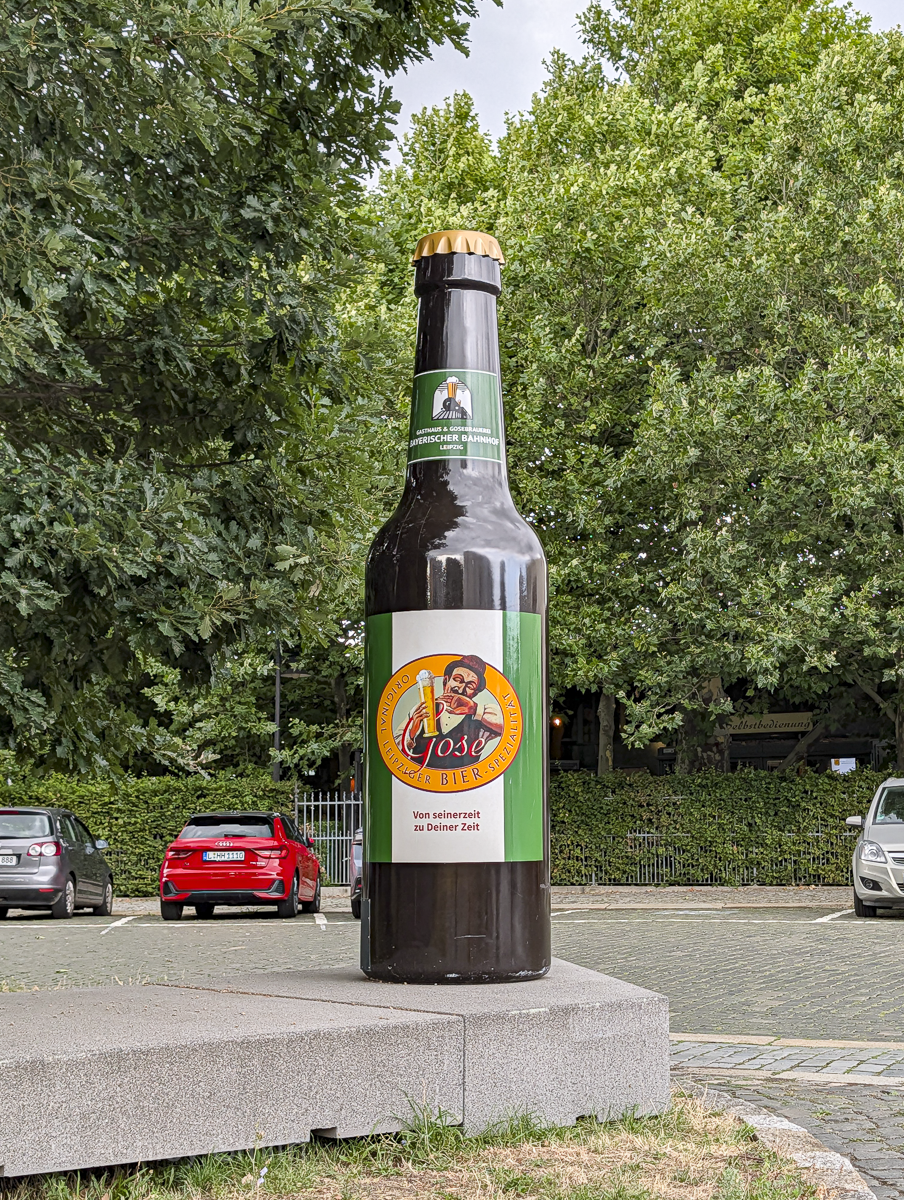
Here at Bayerischer Bahnhof is where you can try the original Leipziger gose. This one tasted more like what I was expecting—slightly salty, slightly tart, perfection. (As far as gose goes, this is their only option, but they do also brew a pilsner, a Schwarzbier, and a weisse.)
What’s interesting about drinking gose at Bayerischer Bahnhof is you can order it seven different ways:
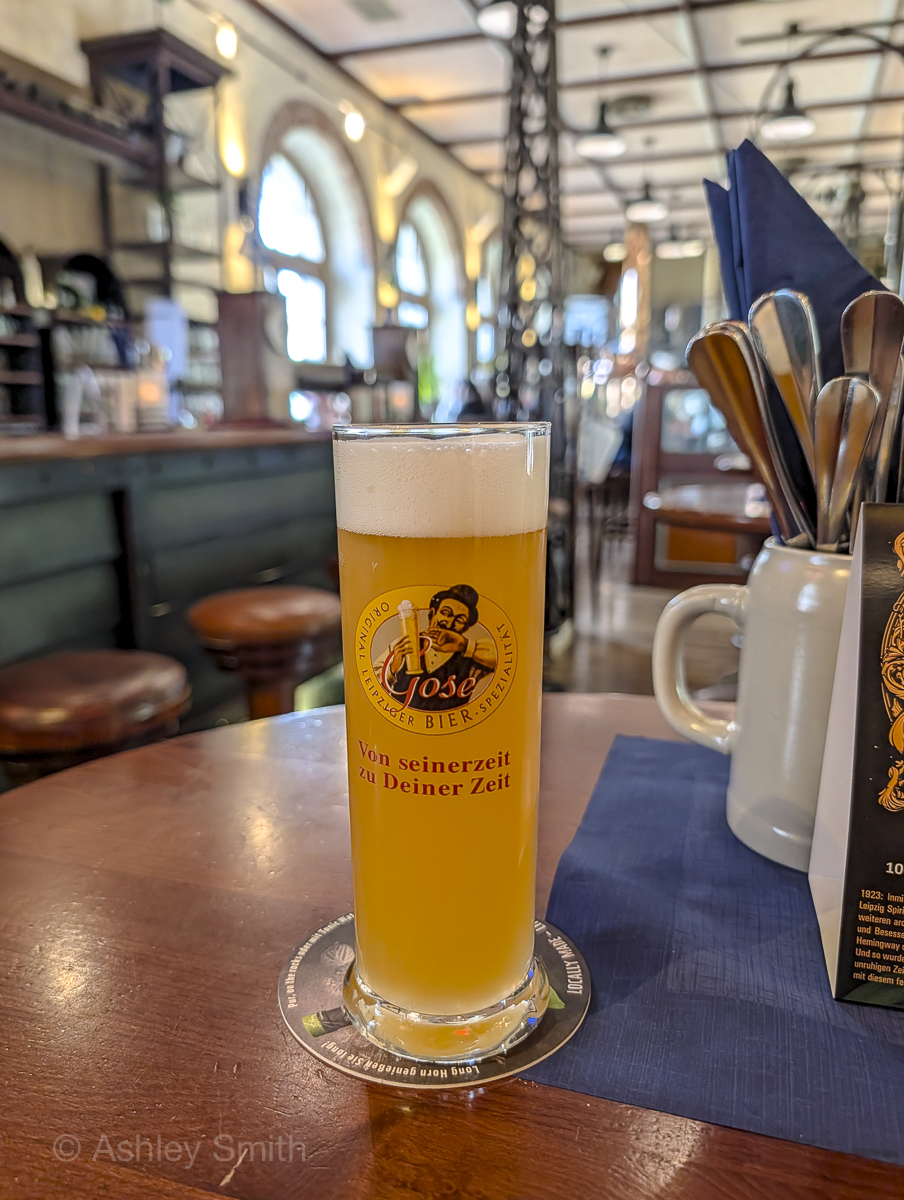
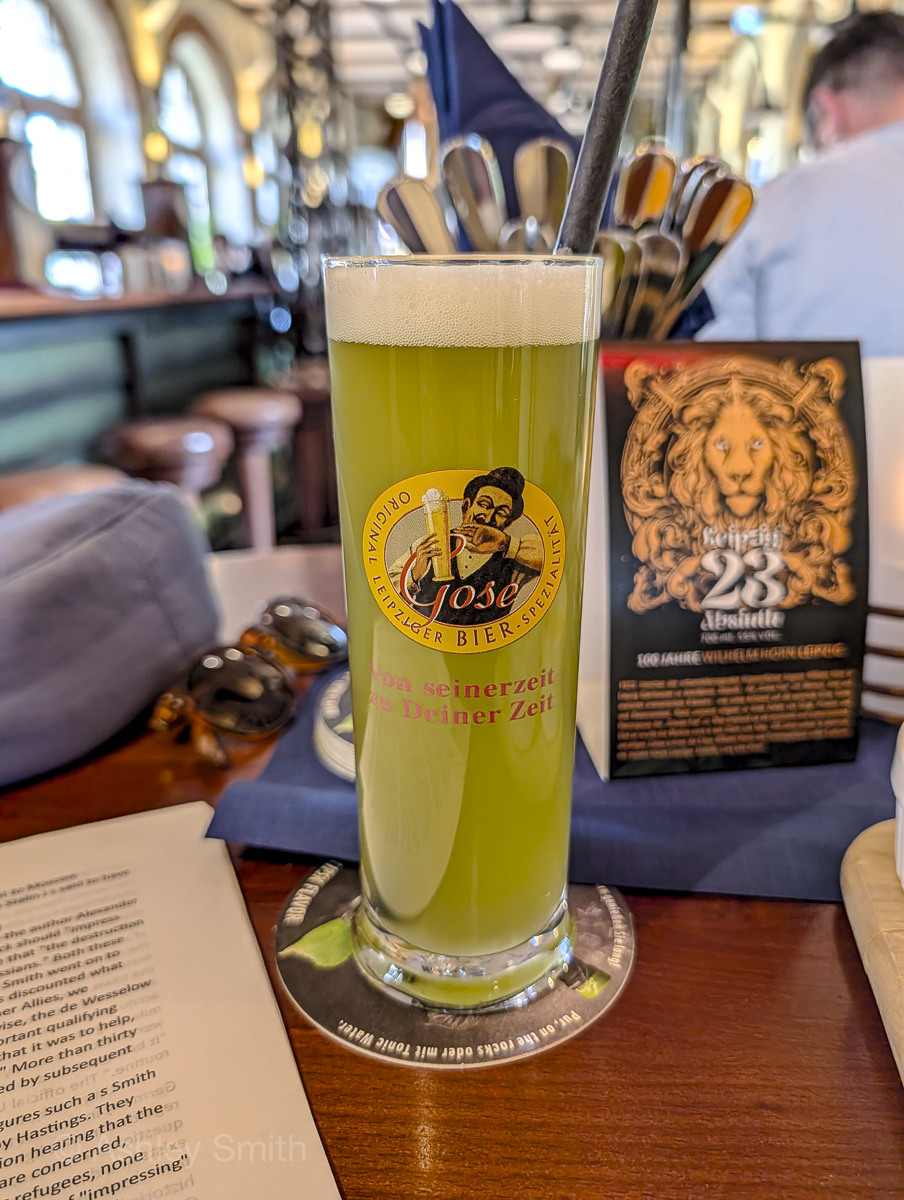
If you’ve ever been to Berlin for Berliner Weisse, this isn’t new to you. Mixing different flavored syrups (especially woodruff and raspberry) with your beer is standard practice. So, I ordered a gose with woodruff to compare.
So what exactly is “woodruff?” Well, I still don’t know. It’s pretty tasty but hard to describe. If I had to put words to it, the descriptors that come to mind are: marshmallow, vanilla, and maybe almonds? All I know is that when I drink it, I think of unicorns. So, I hope that helps.
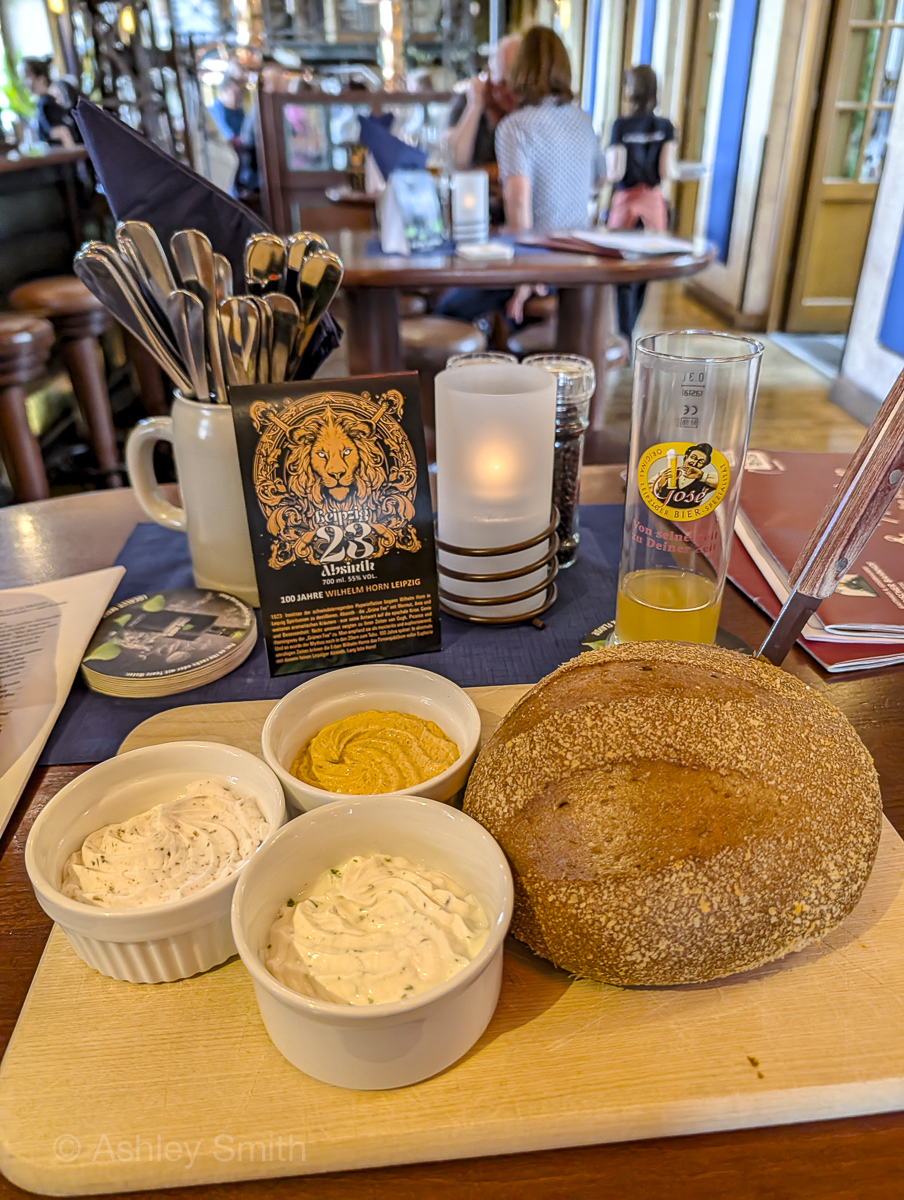
Bayerischer Bahnhof also has a full menu of great food so be sure to eat while you’re here. I got the “Whole warm potato bread with selection of homemade spreads.” One of these spreads was rendered pork fat. This is Germany, after all.
Dolden Mädel Braugasthaus
Also within the Bayerischer Bahnhof complex is the new Dolden Mädel Braugasthaus. This taproom and restaurant famously serves around 100 varieties of craft beer which include the Bayerischer Bahnhof original Leipziger gose mentioned above. So, if you’re looking for a place to try the original gose and a bunch of other unique things, head here. They also have a large beer garden.
Gosenschenke “Ohne Bedenken”
The other major spot in Leipzig to drink gose is a place called Gosenschenke “Ohne Bedenken”. The word “Gosenschenke” is a term used to describe a traditional place where you can drink gose. “Ohne Bedenken” means “Without Hesitation.”
This is a historic gose tavern said to be “the world’s only remaining gose tavern still existing on its historic site” since 1899. It, too, is a full restaurant and also has one of the largest beer gardens in Leipzig.
Beginning in 2017, the new owner broke with tradition and began brewing a specially-created mild gose (Edelgose) which has won several major awards and continues to be the brewery’s flagship beer. Like at Bayerischer, you can also order your edelgose several different ways including with strawberry, banana, mango, blueberry, and other flavored syrups.
Sadly, this place has been closed every day that I’ve been to Leipzig so I still haven’t been able to try the edelgose for myself. But when I eventually visit Leipzig on a day that’s not Monday or Tuesday, I’ll update this post. That said, this place has rave reviews and continues to be a favorite gose spot among locals.

More info for your trip to Germany
Like this post? Have more questions about drinking beer in Germany? Let me know in the comments below. Thanks for reading!

Save this info, pin these images: